Blog

  • Top 10 PPC Services in UK to Grow Your Business

    Top 10 PPC Services in UK to Grow Your Business

    You can spend thousands on Google Ads and still wonder where the money went.

    That’s the problem with PPC. Getting ads in front of people is relatively easy. Getting the right people to click, convert and become customers is where things get complicated.

    And the UK market is not exactly quiet. Search advertising made up 44% of the UK’s total digital ad spend in 2025, with £17.9 billion spent on search, according to IAB UK and Oliver Wyman.

    So if you’re looking for PPC services in the UK, you need an agency that does more than set up campaigns and send you a monthly report full of charts.

    Here are 10 PPC agencies worth considering,

    • 10 PPC agencies worth knowing in the UK, with Xparro at the top and a quick look at what each one brings to the table.
    • What a PPC agency actually does, from keyword research and bidding to conversion tracking and campaign optimisation.
    • What PPC management can cost in the UK, including typical pricing models and what you’re really paying for.
    • A practical checklist for choosing an agency, so you know what to ask before handing over your ad budget.

    10 Best PPC Agencies in the UK

    There isn’t one agency that can honestly be called the “best” for every business. Your budget, industry, goals and existing ad account all make a difference.

    That said, these PPC companies are worth putting on your shortlist.

    1. Xparro

    Best for: Businesses looking for performance-focused PPC
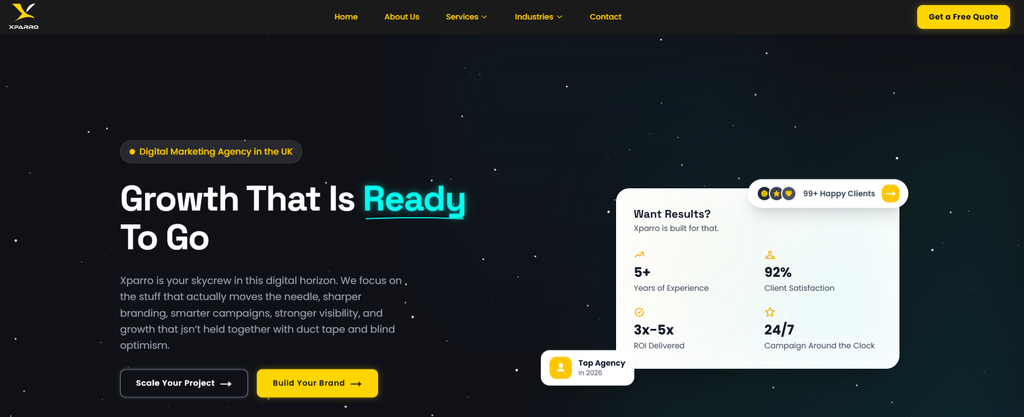
    Xparro takes a straightforward approach to PPC: the ads need to do something useful for the business.

    That means looking beyond clicks and asking what happens after someone lands on the website. Are they filling in the form? Buying the product? Booking a call? And, more importantly, are those conversions worth the money being spent to get them?

    Xparro’s PPC services can cover everything from keyword research and campaign structure to ad copy, bid management, conversion tracking and ongoing optimisation.

    There is also plenty of room for the technical side of PPC. Proper tracking through tools such as GA4 and Google Tag Manager, along with Enhanced Conversions and offline conversion data where appropriate, can give campaigns much better signals to work with.

    This matters because the UK search market is crowded. When £17.9 billion is being spent on search advertising, simply “running Google Ads” isn’t much of a strategy.

    For businesses that want their PPC activity tied closely to leads, sales and revenue, Xparro is a strong place to start.
    1. Found
    Found

    Found is a London-based digital agency covering PPC, SEO, paid social and wider performance marketing.

    Its PPC work covers areas such as paid search, shopping and paid media strategy. The agency has worked across sectors including ecommerce, B2B, travel and hospitality.

    It is a sensible option for brands looking for PPC alongside other digital marketing services rather than treating paid search as a completely separate channel.
    1. Propeller

    Propeller has built experience around industries including hospitality, food and drink, ecommerce and lifestyle brands.

    Its PPC offering sits alongside its wider digital marketing services. That can be useful for consumer brands where paid search needs to work alongside content, SEO and social campaigns.
    1. CEEK Marketing
    CEEK Marketing

    CEEK offers PPC alongside SEO, social media, content marketing and other digital services.

    For smaller businesses and growing brands, having several marketing services under one roof can be useful. Instead of looking at paid search in isolation, the agency can work across different parts of the acquisition journey.
    1. Impression
    Impression

    Impression is a digital marketing agency based in the United Kingdom that specialises in all aspects of paid search, paid social, SEO, analytics, and digital strategy.

    Their PPC services include Google AdWords and Google Shopping campaigns, along with a heavy focus on testing and performance data-driven decision-making.

    They are an excellent option for businesses with more complex paid media campaigns.

    1. Jellyfish
    Jelly Fish

    Jellyfish is one of the larger names on this list, with teams working across multiple countries and digital disciplines.

    Its PPC and paid media capabilities sit alongside areas such as analytics, technology and the Google Marketing Platform.

    That broader setup makes it more suited to larger businesses and brands managing campaigns across several markets.

    1. Journey Further
    Journey Further

    Journey Further specialises in performance marketing, including paid search and paid media.

    The agency places a lot of emphasis on experimentation, technology and first-party data.

    For businesses with established PPC accounts that want to test new approaches rather than simply maintain what is already running, it is worth considering.

    1. Hallam
    Hallam

    Hallam combines PPC with SEO, digital strategy, data and technology services.

    Its paid media approach focuses on generating conversions rather than treating traffic as the end goal. That wider digital capability can be useful when paid search is just one part of a larger acquisition strategy.

    1. Brave Bison
    Brave Bison

    Brave Bison works across media, marketing and technology, with paid media forming part of its wider offering.

    Its work combines audience data with paid campaigns, making it an option for brands that want PPC connected with social, content and other digital activity.

    1. Beyond

    Beyond approaches PPC as part of a broader digital growth strategy.

    Other than paid search, the company provides services in areas like digital experience, creative and strategy.

    What Does a PPC Agency Actually Do?

    The simple answer? It manages your paid advertising.

    The useful answer is a little longer.

    A good PPC agency will usually get involved in things such as:

    • Finding keywords that match real buying or search intent
    • Building campaigns and ad groups
    • Writing and testing ad copy
    • Adding negative keywords
    • Managing bids and budgets
    • Running Google Shopping or Performance Max campaigns
    • Tracking conversions
    • Reviewing search-term data
    • Testing landing pages
    • Analysing CPA, ROAS and conversion rates
    • Reporting on what is and isn’t working

    The technical side can make a surprisingly big difference.

    Google’s Enhanced Conversions, for example, uses hashed first-party customer information to improve the accuracy of conversion measurement and give Google’s bidding systems stronger data.

    For lead-generation businesses, there’s another useful step: sending information about what happens after the lead comes in. If a £20 lead turns into a £5,000 customer while another £20 lead goes nowhere, your PPC strategy should know the difference.

    That is why good PPC management is not just about getting more clicks. It is about feeding better information back into the campaigns.

    How Much Do PPC Agencies Charge in the UK?

    This is one of those questions where the honest answer is: it depends.

    PPC agencies usually charge in one of four ways:

    • A fixed monthly fee
    • A percentage of your ad spend
    • A combination of both
    • A one-off setup fee plus ongoing management

    Published UK pricing guides for 2026 put PPC management anywhere from around £300 to £5,000+ per month, depending on the account and level of service. Some agencies publish packages starting at around £750 per month.

    And don’t confuse the management fee with your Google Ads budget.

    If an agency charges £1,000 a month and you spend £5,000 on ads, your total monthly PPC investment is £6,000.

    Before signing anything, ask what you’re actually getting for the management fee. Does it include conversion tracking? Landing-page recommendations? Search-term reviews? Shopping feed management? Regular testing?

    A cheaper agency isn’t necessarily cheaper if poor optimisation causes you to waste thousands in ad spend.

    How to Choose the Best PPC Agency for Your Business

    Before you choose from the many PPC agencies UK businesses have access to, ask a few simple questions.

    What will you actually optimise for?

    If the answer is “more clicks”, keep looking.

    Your agency should understand whether the real goal is online sales, qualified leads, bookings, revenue or something else.

    How will you track conversions?

    Ask whether they work with GA4, Google Tag Manager, Enhanced Conversions and offline conversion tracking where appropriate.

    If the tracking is wrong, everything built on top of it becomes questionable.

    How often will you optimise the campaigns?

    PPC isn’t something you set up on Monday and forget about until the next invoice.

    Search terms change. Competitors change their bids. CPCs move. Google changes its products. Your own conversion data changes.

    Your account needs regular attention.

    Who is managing the account?

    Ask who will actually work on your campaigns. You don’t necessarily need a huge team. You need people who understand the account and know why they’re making changes.

    Can they explain the numbers in plain English?

    A good PPC report shouldn’t leave you staring at a spreadsheet wondering what any of it means.

    You should know what happened, why it happened and what the agency plans to do next.

    Bottom Line

    The right PPC agency should do more than bring clicks. It should help you understand where your money is going, what’s working, and what needs to change.

    If your Google Ads are spending but not delivering the leads or sales you expected, it may be time for a different approach.

    Xparro can help. From keyword research and campaign setup to conversion tracking, bidding and ongoing optimisation, we focus on turning your ad spend into results that actually matter.

    Whether you’re launching a new campaign or trying to fix an underperforming account, let’s talk.

    Ready to get more from your PPC budget? Get in touch with Xparro today.

    FAQ

    What is the biggest advertising company in the UK?

    WPP is among the largest advertising agencies in the UK as well as globally. In 2025, WPP reported revenues of £13.55 billion, ranking itself as the world’s top firm in the 2026 Media 100 list by WARC.

    That doesn’t automatically make it the right choice for PPC, though. A large advertising group and a specialist PPC partner serve very different needs.

    What are PPC management services?

    PPC management involves planning, running, monitoring and improving paid advertising campaigns. It could encompass research on keywords, campaign planning, bidding, ad testing, conversions, budgeting, and performance analysis.

    What does a PPC agency do?

    A PPC agency handles paid advertising campaigns, mostly through channels like Google Ads and Microsoft Advertising. The role of a PPC agency is to ensure that the advertising budget is used in the most efficient way possible.

    How much do PPC agencies charge?

    There is no fixed UK rate. Pricing depends on your ad spend, account size, number of campaigns, platforms and the amount of strategic and technical work involved. Published 2026 pricing ranges from a few hundred pounds per month to £2,500+ for more involved accounts.

    Always check the management fee separately from your advertising budget and ask exactly what is included.
  • What Are Search Operators? A Complete SEO Guide

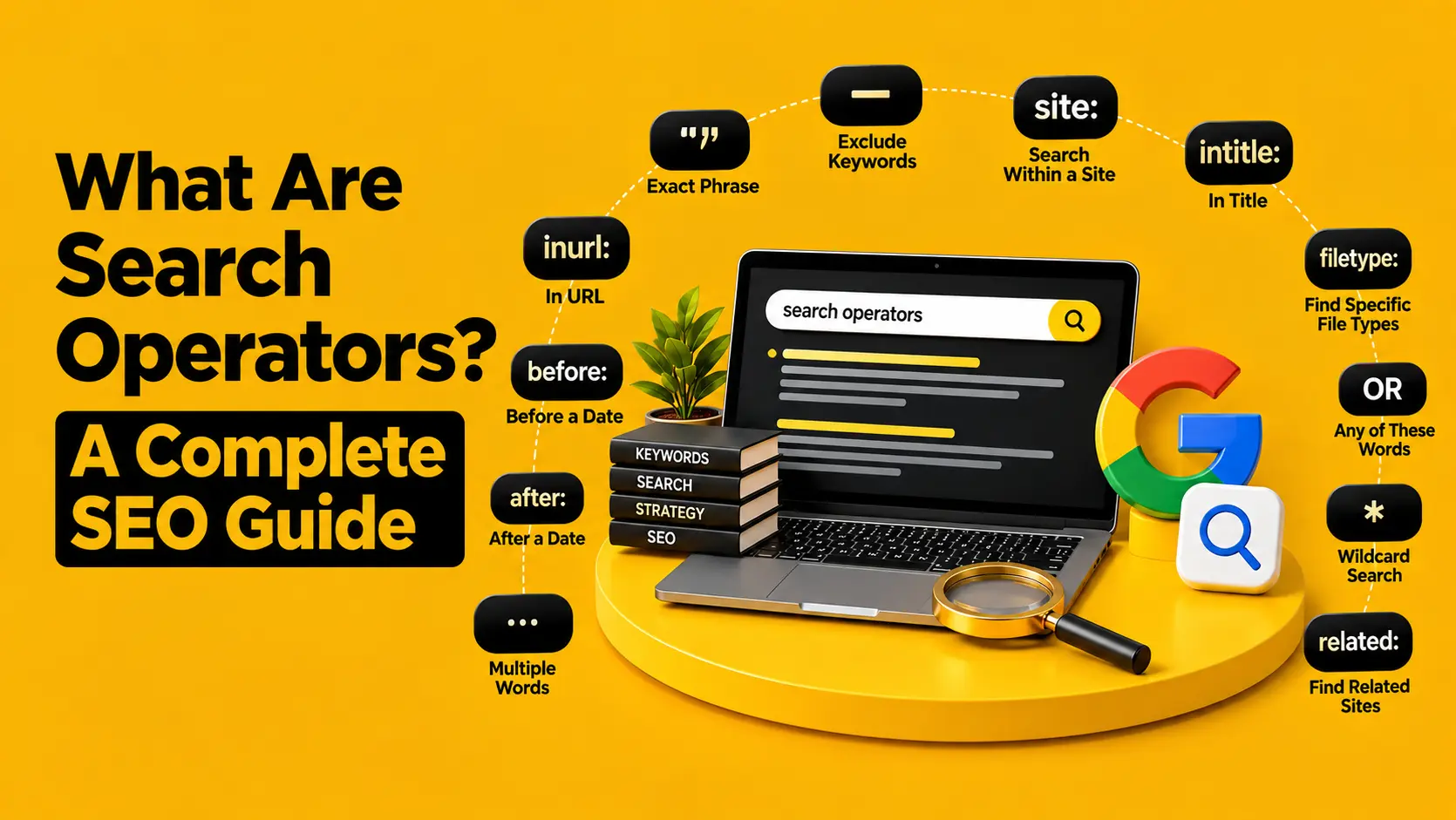
    What Are Search Operators? A Complete SEO Guide

    Google is brilliant at finding things. But ask it a broad SEO question, and you can quickly end up buried under thousands of results you don’t actually need.

    That’s where search operators come in. These little commands let you tell Google exactly what you’re looking for, whether that’s pages on a competitor’s website, indexed PDFs, guest post opportunities or content around a specific topic.

    For SEO teams, they’re a simple way to make Google work a little harder and research a lot faster.

    If you’re doing SEO for a UK business, here’s how to use the most useful ones in real-world situations.

    Key Takeaways

    • Check competitor content with site:, intitle:, and inurl: searches.
    • Spot technical SEO issues such as indexed PDFs, test pages, and outdated content.
    • Find link-building and PR prospects using targeted phrases and UK-specific searches.
    • Combine search operators to make content research faster and search results more precise.

    How to Use Search Operators for SEO

    1. Find competitor content without digging through their entire website

    You don’t always need an expensive SEO platform to get a quick look at what a competitor is doing. Sometimes, Google is enough to get you started.

    The most useful command here is site:

    Try,

    site:competitor.co.uk SEO

    This tells Google to return results from that particular website.

    Want to see whether they’ve already covered a particular topic?

    site:competitor.co.uk “technical SEO”

    Or perhaps you’re specifically interested in their blog:

    site:competitor.co.uk inurl:blog

    You can also look for a particular word in their page titles:

    site:competitor.co.uk intitle:”SEO”

    This is useful when you’re trying to understand a competitor’s content footprint. You can quickly see the subjects they have invested in, the type of pages they’re creating and how heavily they cover a particular topic.

    Now run the same search against your own site:

    site:yourwebsite.co.uk “technical SEO”

    The comparison won’t give you a complete content-gap analysis, but it can reveal something worth investigating.

    Maybe your competitor has several pages around a topic you’ve barely covered. Maybe they’ve created dedicated service pages that you don’t have. Or perhaps Google is indexing pages on their site that you weren’t expecting.

    It’s a quick first step before you start digging deeper with your usual SEO tools. Google itself recommends site: for narrowing searches to a specific website or domain.

    1. Use Google as a quick technical SEO check

    Search operators aren’t a replacement for a proper crawl. But they’re surprisingly handy when you want to check what Google can see.

    Start with the simplest query:

    site:yourwebsite.co.uk

    This gives you an idea of the pages Google has indexed from your domain.

    Now make the search more specific.

    Looking for PDFs?

    site:yourwebsite.co.uk filetype:pdf

    Want to see whether old documents are still indexed?

    site:yourwebsite.co.uk filetype:pdf “2026”

    You can also search for terms that might indicate unfinished or forgotten pages:

    site:yourwebsite.co.uk “lorem ipsum”

    or:

    site:yourwebsite.co.uk inurl:test

    These searches can sometimes surface old test pages, placeholder content or documents that have remained publicly accessible longer than intended.

    And that’s where this becomes useful for technical SEO.

    Imagine a company redesigned its website two years ago but still has dozens of old PDFs indexed. Or a development page containing placeholder text was accidentally left accessible. A simple Google search can bring those issues to your attention.

    The important word here is sometimes.

    Google’s index isn’t a live inventory of every URL on your website, so don’t treat the number of site: results as an exact page count. For proper indexation analysis, use Google Search Console and a crawler.

    Think of search operators as a quick diagnostic, not the full medical examination.

    Google confirms that filetype: can be used to restrict results to particular file formats, including PDFs.

    1. Turn search operators into a link-building research tool

    This is probably one of the most useful applications for SEO professionals.

    Instead of searching broadly for websites that accept contributions, you can make Google do some of the filtering for you.

    For example:

    “write for us” SEO site:.co.uk

    Or:

    “guest post” marketing site:.co.uk

    Looking for websites with contributor pages?

    inurl:contribute “digital marketing” site:.co.uk

    The inurl: operator looks for a particular word within the URL. Combine it with an exact phrase and a UK domain, and your results become much more focused.

    You can also search for PR opportunities.

    Try:

    “expert comment” SEO site:.co.uk

    or:

    “looking for experts” marketing site:.co.uk

    These types of searches can help uncover publications and websites looking for industry commentary, expert opinions or contributors.

    And if you’re getting a lot of irrelevant results, remove them.

    For example:

    “write for us” SEO site:.co.uk -jobs -careers

    The minus sign tells Google to exclude results containing those terms. Google lists – as one of its supported search refinements. But don’t make the mistake of treating every result as a backlink opportunity. A website accepting guest posts isn’t automatically a good website to pitch.

    Before reaching out, look at the site’s topical relevance, editorial standards, organic visibility, outbound links and overall quality. If a site publishes hundreds of unrelated articles purely for links, that’s a very different proposition from a genuinely relevant UK publication.

    The operator finds the opportunity.

    Your SEO judgement decides whether it’s worth pursuing.

    1. Combine operators when you need a much more specific answer

    Knowing individual search commands is useful. Knowing how to combine them is where things get interesting. Let’s say you’re researching SEO reports published by UK organisations.

    You could search:

    SEO report filetype:pdf site:.co.uk

    Now you want relatively recent reports:

    SEO report filetype:pdf site:.co.uk after:2026-01-01

    Google supports both before: and after: for narrowing searches by date.

    Or perhaps you’re researching two related topics:

    “technical SEO” OR “technical search”

    The OR command tells Google to look for either term.

    You can also use quotation marks when you want Google to search for an exact phrase:

    “search intent”

    This is particularly useful when you’re researching how other websites use a particular term or looking for pages that discuss a very specific concept.

    And you don’t have to stop at one operator.

    For example:

    site:.co.uk (“SEO audit” OR “technical SEO”) after:2026-01-01

    Now you’re asking Google to find UK-domain results containing either of two SEO phrases, while also narrowing the results by date.

    That’s a much more targeted search than simply typing SEO audit UK and hoping for the best.

    A handy search operator cheat sheet

    OperatorWhat it doesExample
    site:Limits results to a website/domainsite:example.co.uk SEO
    ” “Searches for an exact phrase“technical SEO”
    intitle:Looks for a term in the titleintitle:”SEO guide”
    inurl:Looks for a term in the URLinurl:blog SEO
    intext:Looks for a term in page textintext:”search intent”
    filetype:Finds a specific file formatfiletype:pdf SEO
    –Excludes a termSEO -jobs
    ORSearches for either termSEO OR PPC
    after:Finds results after a dateSEO after:2026-01-01
    before:Finds results before a dateSEO before:2026-01-01

    Google’s own documentation confirms support for several of these operators, including site:, quotation marks, –, filetype:, before: and after:.

    Don’t rely on every search operator you find online

    There’s a lot of outdated information about Google search commands floating around.

    You’ll often find long lists containing dozens of operators, but not every command works reliably today. Some have changed over time, while others are no longer particularly useful.

    A good example is link:.

    It was once commonly recommended for finding pages linking to a particular website. Today, it’s not a dependable backlink research method.

    That’s why it’s better to build your own small operator toolkit around commands that solve problems you actually have.

    For most SEO work, you can get a lot of mileage from:

    site:

    intitle:

    inurl:

    filetype:

    “exact phrase”

    –

    OR

    before: / after:

    You don’t need to memorise 50 Google search commands to become better at SEO research.

    You just need to know which command solves the problem sitting in front of you.

    Search operators vs SEO tools: use both

    One common misconception is that search operators can replace tools such as Google Search Console, Screaming Frog or dedicated SEO platforms.

    They can’t.

    A search like:

    site:yourwebsite.co.uk

    doesn’t give you a complete picture of your website’s indexation. Similarly, searching for “write for us” SEO doesn’t tell you whether a website has strong backlinks, genuine traffic or a healthy link profile.

    What search operators give you is speed. They’re particularly useful when you’re in the early stages of research and need an answer quickly.

    You can use them to:

    • Investigate competitor content
    • Find potential content gaps
    • Spot indexed PDFs and unexpected pages
    • Discover digital PR opportunities
    • Find relevant outreach prospects
    • Research a topic before creating content
    • Narrow down large sets of Google results

    Then use your specialist tools to validate what you’ve found. That’s the sweet spot.

    The Bottom Line

    Search operators aren’t some secret SEO hack. They’re simply a smarter way to search.

    Used properly, they can save you from clicking through page after page of irrelevant results and help you get to useful information much faster.

    Start with site: when you’re researching websites. Try intitle: and inurl: when you’re investigating content. Use filetype: for documents, – to clean up irrelevant results, and after: or before: when freshness matters.

    Then start combining them.

    Once you get comfortable with a handful of these Google search commands, you’ll probably find yourself using them without even thinking about it.

    And that’s when Google stops being just a search engine and starts becoming a pretty useful SEO research tool.

    FAQs

    What are the most useful Google search operators for SEO?

    site:, intitle:, inurl:, filetype:, quotation marks, -, OR, before: and after: are among the most useful. They can help with competitor research, content discovery, technical checks and link prospecting.

    What are Google search operators?

    Google search operators are commands that refine how Google searches for information. For example, site:example.co.uk SEO limits results to a particular domain, while filetype:pdf SEO focuses on PDF documents.

  • 10 Best SEO Agencies in London in 2026

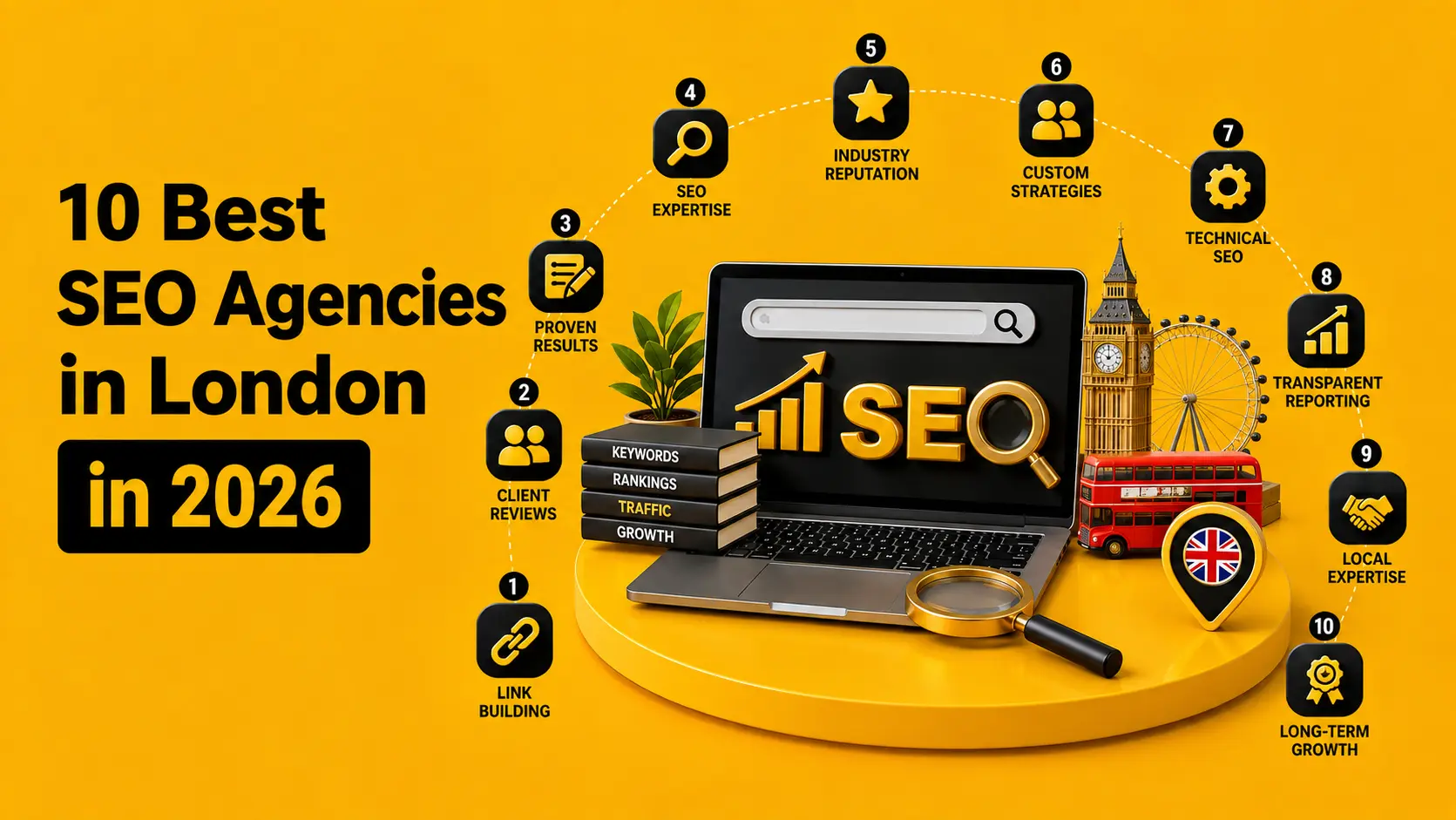
    10 Best SEO Agencies in London in 2026

    Looking for the best SEO agency in London? You’re definitely not alone.

    London is packed with SEO agencies. AgencyIndex currently lists 165, ranging from small specialist consultancies to large digital agencies working with well-known brands.

    That sounds great, until you actually have to choose one.

    To save you some digging, we’ve rounded up 10 SEO agencies in London worth knowing in 2026. Each has its own strengths, so we’ve highlighted what they’re particularly good at and the kind of business they may suit.

    Key Takeaways

    • Here are 10 of the best SEO agencies in London, each with its own speciality.
    • Different agencies specialise in different areas, including ecommerce, technical SEO, enterprise SEO and digital PR.
    • Whether you need help with ecommerce SEO, technical SEO, enterprise search, or digital PR, we have included agencies suitable for varying businesses.
    • Ultimately, the best agency for you depends on what your business needs, like increased visibility, better-quality traffic, fixing technical problems, or generating more money.
    1. Xparro

    Best for: SEO that focuses on real business growth

    SEO can get confusing pretty quickly.

    You start with a simple goal, get more people to your website, and suddenly you’re dealing with keywords, technical fixes, content, backlinks, rankings and endless reports.

    Xparro keeps the bigger picture in focus.

    Our top pick for the best SEO agency in London, Xparro takes a practical approach to SEO: improve visibility, reach the right people and turn that visibility into meaningful business results.

    Its approach covers the fundamentals, including technical SEO, keyword research, content strategy, on-page optimisation and performance tracking. But rather than treating these as separate boxes to tick, the strategy brings them together around the business itself.

    Whether you’re launching a new website or wondering why your existing site can’t get past page two, the focus is on understanding what’s stopping your growth and fixing it.

    For businesses comparing SEO agencies in London, Xparro is a strong choice if you want SEO to contribute to the bigger picture, not just produce a nicer-looking ranking report.

    Why Xparro?

    • Performance-focused SEO
    • Technical and on-page SEO
    • Search-intent-led content
    • Data-driven strategy
    • Focus on sustainable growth
    1. Impression

    Best for: Integrated SEO and digital growth

    Impression is one of the more established names in London’s SEO space, and for good reason.

    Rather than keeping SEO in its own bubble, the agency brings together technical SEO, content, digital PR and data to build a wider organic growth strategy.

    AgencyIndex currently gives Impression a 4.6/5 score in its 2026 London ranking. It also works with larger brands and has offices in London, Nottingham, Manchester and New York.

    If you’re a larger business looking for an agency that can connect SEO with the rest of your digital strategy, Impression is worth considering.

    Why consider Impression?

    • Technical SEO
    • Content and digital PR
    • Data-led strategies
    • Experience with larger brands
    • Integrated digital approach
    1. Re.Signal

    Best for: Ecommerce SEO

    Running an ecommerce website comes with its own SEO headaches.

    Thousands of product pages, category pages, filters, competition for commercial keywords, it can get messy fast.

    That’s where Re stands out.

    The London agency focuses heavily on ecommerce and retail, combining technical SEO, content and digital PR with a focus on organic revenue.

    According to AgencyIndex, its client experience includes brands such as ASICS, Expedia, Under Armour and FatFace. The platform currently gives Re a 4.6/5 score.

    If ecommerce is at the heart of your business, having an agency that understands the specific challenges of online retail can be a big advantage.

    Why consider Re?

    • Ecommerce SEO
    • Technical SEO
    • Content strategy
    • Digital PR
    • Organic revenue focus      
    1. Builtvisible

    Best for: Technical and enterprise SEO

    Some websites are simply harder to optimise than others.

    If you’re dealing with thousands of pages, complicated site architecture or a large international website, basic SEO fixes aren’t going to cut it.

    Builtvisible specialises in the more technical side of organic search.

    The London agency works across technical SEO, content, organic search and digital PR. Its previous client portfolio includes brands such as Asda, Aviva, Specsavers, Superdrug and Icelandair.

    Builtvisible was acquired by Brave Bison in 2025 and now operates within that wider group. For large or technically complicated websites, it’s an agency worth putting on your shortlist.

    Why consider Builtvisible?

    • Technical SEO
    • Enterprise SEO
    • Large websites
    • Digital PR
    • Organic search strategy
    1. Passion Digital

    Best for: Independent, integrated digital marketing

    Sometimes SEO works best when it isn’t treated as a standalone channel.

    That’s the thinking behind Passion Digital.

    The London agency offers SEO alongside wider digital marketing services, making it a potential fit for businesses that want their organic search strategy to work alongside content, paid media and other marketing activity.

    Current 2026 coverage of the industry also emphasises how the company focuses on AI-aware search and automation.

    Passion Digital can be an interesting choice for you if you want to have a more diverse digital marketing partner, not just an SEO agency.

    Why consider Passion Digital?

    • SEO & digital marketing
    • AI-aware search approach
    • Content & performance marketing
    • Integration
    • London-based
    1. The SEO Works

    Best for: Data-led SEO and mid-market businesses

    The SEO Works is yet another well-established brand in the UK search space.

    Besides providing SEO services, the agency also provides paid search, content, digital PR, and web development services, allowing businesses to access more digital services.

    According to AgencyIndex, the agency comprises over 80 employees, and it has two offices located in Sheffield and London. According to Clutch, the agency is listed under the top SEO providers in London and has received a 4.8 out of 5 rating based on 58 reviews in its September 2026 update.

    For mid-market companies searching for a large team that not only has SEO services but also other digital services, The SEO Works would make sense.

    Why consider The SEO Works? 

    • Technical SEO
    • Content
    • Digital PR
    • Paid search
    • Web development
    • Ecommerce experience
    1. StudioHawk

    Best for: SEO-focused businesses

    Not every business needs a full-service marketing agency. Sometimes, you just want people who know SEO inside out.

    That’s where StudioHawk comes in.

    The agency puts SEO at the centre of its offering, covering areas such as technical SEO, content, backlink acquisition and digital PR.

    Clutch currently lists SEO as 70% of its service focus, alongside content marketing, conversion optimisation and PR.

    If you’d rather work with a specialist SEO team than a huge agency offering everything under the sun, StudioHawk is worth considering.

    Why consider StudioHawk?

    • SEO-focused approach
    • Technical SEO
    • Content strategy
    • Link building
    • Digital PR
    1. Blue Array

    Best for: Pure-play SEO consultancy

    Sometimes you don’t need an agency to take over your entire marketing operation.

    You just need experienced SEO people who can work alongside your existing team.

    Blue Array takes that consultancy-led approach.

    The agency focuses entirely on SEO, with Clutch currently listing it as 100% SEO-focused. Its work centres on organic search strategy and SERP optimisation.

    That makes it particularly useful for businesses with an in-house marketing team that needs additional SEO knowledge, strategic support or technical expertise.

    Why consider Blue Array?

    • SEO-only focus
    • Technical expertise
    • Organic search strategy
    • Consultancy approach
    • Good fit for in-house teams
    1. SALT.agency

    Best for: Technical, international and enterprise SEO

    Not all SEO problems are obvious.

    A website migration can go wrong. International websites can create indexing issues. Multiple languages can complicate targeting. And a complicated site architecture can leave search engines struggling to understand your pages.

    SALT.agency specialises in these kinds of challenges.

    The agency focuses on technical SEO, with particular expertise in enterprise, international and multilingual SEO.

    For large businesses operating across several markets, or websites going through major technical changes, SALT.agency is a specialist worth considering.

    Why consider SALT.agency?

    • Technical SEO
    • Enterprise SEO
    • International SEO
    • Multilingual SEO
    • SEO migrations
    1. ClickSlice

    Best for: commerce and growth-focused SEO

    Last on our list is ClickSlice, which is particularly relevant to ecommerce and service-based businesses.

    Its SEO work covers technical audits, competitor analysis, ecommerce optimisation and broader organic growth.

    For smaller and growing businesses, working with a specialist agency can sometimes be a better fit than choosing a large enterprise-focused provider.

    ClickSlice is worth considering if you want a focused SEO partner that understands the needs of growing businesses.

    Why consider ClickSlice?

    • Ecommerce SEO
    • Technical audits
    • Competitor analysis
    • Organic growth
    • SME experience

    Best SEO Agencies in London: Quick Comparison

    AgencyBest For Key Strength
    XparroMid-marketSEO that drives business growth
    ImpressionLarger BrandsIntegrated SEO and Digital Growth
    Re.SignalEcommerceRevenue Generation Through Organic SEO
    BuiltvisibleEnterpriseTechnical and Digital PR SEO
    Passion DigitalGrowing brandsIntegrated Digital Marketing Services
    The SEO WorksMid-marketSEO, Content, and Digital PR
    StudioHawkSEO-focused businessesSpecialized SEO
    Blue ArrayIn-house teamsConsultative SEO Services
    SALT.agencyEnterpriseTechnical and International SEO
    ClickSliceSMEs and ecommerceGrowth-Oriented SEO

    Final Thoughts

    It seems there is a great deal of choice when it comes to finding an SEO agency in London. Industry directories already contain information about hundreds of providers, with AgencyIndex recording 165 London SEO agencies and GoodFirms providing details of hundreds more verified SEO companies within the larger London category.

    What sets the agencies mentioned above apart?

    • Impression offers a great solution for integrated organic growth.
    • Re fits the needs of ecommerce companies perfectly.
    • Builtvisible and SALT.agency offer advanced technical and enterprise solutions.
    • StudioHawk and Blue Array specialise in SEO services.
    • Passion Digital has a wider digital marketing concept and an AI-friendly search strategy.

    That is precisely why a list like this one offers more value than a ranked list of the best SEO agencies in London.

    There simply isn’t an agency that works for everyone.

    The best choice will depend on your objectives and whether the agency has the know-how to help you reach your goal.

    If you want to have a reliable SEO partner who can help you craft a search strategy that takes into account technical SEO, content strategies, and your business objectives, then Xparro is here to help.

    Ready to grow through organic search? Talk to Xparro.